Thirteenth

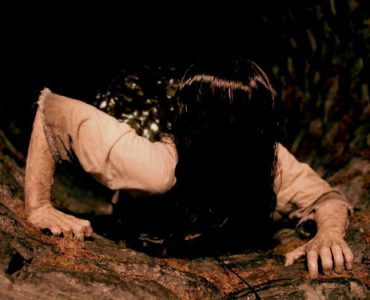
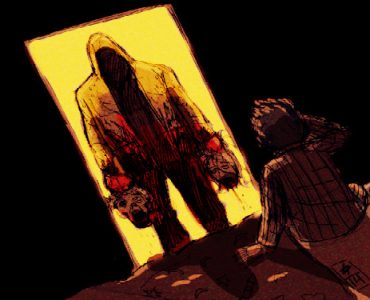
The Thirteenth Tree is a scary ghost story by R.H. Malden about a man who encounters a deformed apparition at a crossroads in the country.

Thirteenth

Thirteenth

If, as I incline to think, architecture in general and domestic
architecture in particular is the best expression of the characteristics
of the period to which it belongs, there would be a good deal to be said
in favour of having been born soon after the year 1570.

Late Tudor or early Jacobean houses always seem to me to exhibit the
qualities which I admire most. They are dignified and beautiful without
conscious effort. Both inside and out I find them extraordinarily
satisfying. ‘This,’ I say to myself, ‘is what a country-house ought to
be.’ They look as if they had grown from the soil as naturally as the
trees in their parks. They are as they are because the men who planned
them were solid, dignified and sure of themselves.

Castles speak of violence and cruelty, until they have become an
anachronism. Then they are sights to be seen rather than houses to live
in. Early Tudor houses have something upstart about them; as, it may be
suspected, had their owners. The Palladian palaces of the eighteenth
century are not free from ostentation. They were meant to display the
wealth and taste of their owners, most of whom had probably made the
Grand Tour. Despite their dignity and internal comfort I can never feel
that they belong to the English countryside. But the type of house which
was built about twenty years on either side of the year 1600 always seems
to me to escape all these defects. One of them was the scene of the story
which I am now going to tell.

It is situated in one of the western counties. That is as much as I shall
say about its geographical position, as I do not want to bring the
_Society for Spectral Investigations_, or any similar body, about my ears
or those of the neighbourhood.

I had known the owner when we were boys. Our paths in life had diverged
and for thirty years or more we never met. We came across each other
accidentally in London, and both welcomed the opportunity of resuming an
old friendship. When he asked me to visit him I was very glad to accept
his invitation. Accordingly, a few weeks later, on a fine day early in
October, I caught a train at Paddington for my journey westwards.

I had made acquaintance with the first twenty miles of the Great Western
in the year 1890, and for some time after that they had been very
familiar to me. But I had not travelled by that route for a good many
years and was horrified to see how the Great Wen (as Cobbett rudely
called London) had spread over what I remembered as pleasant countryside.
One of the few things which did not seem to have altered since I had
passed that way last was a building of really exceptional ugliness (a
hotel, I believe) close to the station at Slough. For, I think, the first
time in my life the sight of it gave me real pleasure.

I had to change three times in the course of my journey and it was nearly
five o’clock when I got out at the country station where my host met me.
The light was failing when we arrived at the house and I could only see
that it was large, and that it promised to be very beautiful.

I was introduced to my hostess and her two daughters, and after tea in
the hall in front of a superb log-fire in a large open fireplace my host
took me to the smoking-room.

‘I had no idea you were such a territorial magnate,’ I said to him when
we had settled down.

‘I never expected to be,’ he said. ‘My father was a parson in the north,
and I became a solicitor in York–as you know. We lived just outside York
for the first fifteen years after I was married. I knew of this place,
but never saw it until I succeeded a distant cousin (whom I never saw
either) nearly seven years ago. He was unmarried and a queer-tempered old
chap by all accounts. Perhaps the fact that he had never seen me
influenced his choice of an heir. The place isn’t entailed and there were
several distant relations beside me. It’s a curious thing, but this
property has never passed in the direct male line since Sir Robert
Newton, whose portrait you’ll see in the dining-room, bought it and built
the house, about the year 1602 I believe. He was Chief Justice of the
Queen’s Bench. His son was drowned in a pool in the garden. It does not
exist now. It was filled in immediately afterwards. No one could ever
understand how the boy got into it, or why, having got in, he couldn’t
get out, as it was quite shallow I believe, and he was more than a child.
There was a daughter who married and brought her family here after her
parents’ death. But her son was killed at Naseby, leaving several
daughters. And so it has gone on. Either there has been no son or he
hasn’t lived to inherit. My immediate predecessor succeeded a childless
uncle, and as we have only two daughters we keep up the tradition. I’m
really almost glad I never had a son, as I am sure my wife would be
nervous about bringing him here. Indeed, I don’t mind admitting that I
think I should be. Of course the village people say there’s a curse on
the place, but they don’t know why. I can’t think that my respected
ancestor–he is my ancestor, if by no means in the direct line–was
likely to have done anything to provoke one.’

Certainly when I looked at the portrait an hour or two later I could
detect nothing evil in it. It suggested that Sir Robert had been a shrewd
and kindly person, who would probably be as lenient on the Bench as the
law allowed him to be. No doubt he had passed many sentences in his time
which we should think harsh or even savage. But that would not have been
the view of his contemporaries.

After dinner we sat in the library. It was a large room completely lined
with well-filled bookcases whose contents looked as if they would repay
examination. There is no saying what may not have wandered into such a
place; just as any oyster may contain a pearl of price. I asked whether
there was a catalogue.

‘Not a very good one,’ was the answer. ‘In fact I’m not sure that I
shan’t spend a good part of this winter trying to improve it. You’d like
to have a look round it tomorrow, I expect. A good many of the books
belonged to Sir Robert. By the way, we’ve put you in what is said to have
been his bedroom. It isn’t often used, but we’ve just had to take up the
floors in some of the rooms nearer ours; dry rot, pretty bad too. But I
think you’ll be quite comfortable there. No; there’s no story about it
that I ever heard. We don’t run to a ghost of any kind.’

We went upstairs soon afterwards, and while I was undressing I meditated
upon the queer fatality which seemed to have pursued the family for three
hundred years. Was it more than a series of odd and unfortunate
coincidences? Are there, or have there ever been, people who had some
malign power which they could direct against their enemies? If it were
so, how was this power operative after their lifetime? Did it exhaust
itself after a period of time or not?

I had finished undressing before I had arrived at a satisfactory answer
to any of these conundrums. When I was ready for bed I went to the
window, opened it and drew back the curtains as was my custom. It was a
clear night with a good deal of moon. My room was on the first floor at
the back of the house, overlooking a part of the garden which I had not
seen before. Immediately below me lay a gravelled terrace, bounded on the
far side by a stone balustrade. On the other side of this, at a lower
level and reached by a flight of steps, lay a small formal garden. In the
middle was a circular stone basin, where I hoped there might be a
fountain. Round the edge stood a number of dark clipped trees–yews or
cypresses I could not tell which. There were twelve of these: one at each
corner and two in between. On the far side was a low stone wall
separating the garden from the park beyond. Very white it looked in the
moonlight; almost as if it were newly built. About the middle there was a
dark patch; ivy or creeper I supposed. It made a clump on the coping and
then spread sideways, in a way which almost suggested the head and arms
of a person in the act of climbing the wall. I thought it rather ugly and
decided that if I were the owner I would have it removed. Then I went to
bed.

For some reason sleep did not come as quickly as usual and I was visited
with the pictures–half-dreams and half-waking–which belong to the
border-line of consciousness. Mine made two scenes. In the first I found
myself seated in a large old-fashioned travelling coach. Beside me was a
figure very much wrapped up. He turned towards me once as if about to
speak, and I recognized the original of the portrait in the dining-room.
Presently we were brought to a standstill by a great concourse of people
who seemed to be streaming away from some spectacle. I put my head out of
the window to see what it was, but drew it in again quickly. A few yards
in front of us was a gallows and there were four bodies dangling from the
cross-beam. As I sat down, feeling as if I should be sick, a head was
poked in at the window on the other side. It belonged to a young man. The
face seemed unnaturally pale. There was something else unusual about it,
but I could not take in what it was. The young man said something in a
low tone to my companion. I could not catch the words, but they seemed to
disconcert him very much. Next moment the face had vanished and we had
begun to move again. I woke fully to find myself murmuring, _An eye for an
eye and a tooth for a tooth_.’

The second scene was a churchyard by night. A funeral was taking place. I
could see the bearers and the men with the torches and the priest. But
there appeared to be no mourners, unless I were one. As the coffin was
lowered into the grave some bird of the night gave a long and dolorous
screech very close overhead. At this I woke. I think there must have been
a hunting owl or a night-jar outside my window. As I did not wish for any
repetition of such scenes I got a book and read until I could feel
confident that I should sleep soundly.

When I went to my window next morning I received a surprise. There, as
was to be expected, was the garden on which I had looked the night
before. But there were no trees and no pool, and I could see no growth
upon the wall at the bottom. Yet I _knew_ that I had seen those things, and
that I had not been dreaming at the time. I decided to say nothing about
them. When we went out after breakfast, however, I did ask my host
whether he knew where the pool in which Sir Robert’s son had been drowned
had been. But he did not. I noticed that the wall between the garden and
park did not look as new as I had thought it the night before. It seemed
to be the same age as the rest of the house, as was to be expected. That
might, however, be due to the difference between daylight and moonlight.
The day was fine and as the neighbourhood was new to me, most of the
hours of daylight were passed out-of-doors. After tea, when we were
sitting in the library, I asked my host whether he knew why or by whom
the curse had been laid upon Sir Robert’s descendants.

‘Well,’ said he, ‘there is a bit of a story about it. But all I know is
very incomplete and doesn’t explain much. It seems that in the old
judge’s time there was a woman in the village who was reputed to be a
witch. Nothing very out of the way about that. In fact you wouldn’t have
to look very far to find witches (or reputed ones) in these west-country
villages to-day. Her name was Miriam Urch (Urch is quite a common name in
these parts) and they say that she was at the bottom of it. But I don’t
know why she should have had a down on the Newtons, and as nothing was
ever proved against her she was given Christian burial in the churchyard
when her time came. You can see what is said to be her grave close to the
north door. I expect it is. Village tradition is generally pretty
accurate on such points. They aren’t quite sure whether she is always in
it though, even now. I believe the Rector has had something to say to old
Job Dixon the sexton about its untidiness more than once. But _he_ says it
isn’t his fault. There are no other graves anywhere near it, and I don’t
think there will be as long as there is a scrap of room anywhere else.’

No more was said on the topic that evening and the hours after dinner
passed pleasantly with a game of bridge with my host and his two
daughters. We were all agreed that games are games, and though due
respect must be paid to the rules which govern them they ought not to be
transformed into hard and dismal forms of work.

It was near midnight before I found myself in my room, and when I was
ready for bed I admit that I hesitated for a moment before drawing back
my curtains. Finally curiosity prevailed. If there were anything to be
seen I might as well see it. It seemed unlikely that any harm could come
to me, or to the family through me.

I looked out. The moon shone brilliantly, and there, beyond any
possibility of mistake, were the pool and the twelve trees. But were
there only twelve? My first impression was that there were more. That was
absurd. I counted them again just to make sure, and, as I had thought,
there was one at each corner with two in between. But as soon as I looked
at them all together I got the impression that there were more. But I
could not have said where the additional one (I felt sure it was only
one) was, nor even whether it were always in the same place. And I
noticed that the ivy, or whatever it had been on the wall at the bottom,
was gone. It might have been cleared away during the day, but I had an
uncomfortable feeling that someone or something had come over and was
dodging about behind the trees. If so, with what intent?

I began to feel an overpowering desire to go and investigate. Yet I could
hardly do that. The door leading to the terrace was doubtless locked and
bolted, and I should be sure to disturb someone in getting it open. What
could I say if I did? That I thought it a fine night for a stroll and
that I always found pyjamas the most comfortable wear for a nocturnal
ramble? For I felt quite certain–I don’t know why–that the trees and
pool would be invisible to anyone except myself. All the same, the desire
to investigate more closely grew stronger and stronger. I have never seen
or experienced hypnotism, but began to feel as I imagine a hypnotic
subject does. It seemed as if I was being dragged out by some force which
was overpowering my own will, and that if I could not get the door open I
should have to jump from my first-floor window. This would never do. As
an antidote I began to recite the first thing which came into my head. It
happened to be the _Battle of Lake Regillus_ from Macaulay’s _Days of
Ancient Rome_ and not for the first time I blessed the wisdom of my
mother who had made us all learn quantities of poetry by heart as soon as
we could read. This particular poem had been my first major achievement
in this line. It had always remained particularly distinct in my memory
because the recitation of it had won two new half-crowns from a
godfather*, and thereby had enabled me to understand (for the first and
last time in my life) what is meant by ‘the possession of wealth beyond
the dreams of avarice.’

[* He subsequently became Chief Justice of Trinidad, and was long
remembered for his patience with garrulous witnesses, and the fervid
eloquence of coloured advocates.]

I am not quite sure whether I declaimed it aloud or not. But I know that
I had only got to the end of the first stanza:

_But the proud Ides when the squadron rides
Shall be Rome’s whitest day_

when the spell, which I was quite sure had been malevolent, broke and I
was completely my own master again. I felt as one does when a motor-car
or bicycle has skidded and disaster in a ditch has been escaped by
inches. I stopped at the window because I felt sure that something was
going to happen. I did not have to wait long. A figure appeared on the
terrace; where it had come from I did not see. When it emerged from the
shadow of the house I saw that it was that of a young man; not much more
than a boy. He seemed to be dressed as a young gentleman of quality would
have been about the year 1600 or a little later. For some reason this
did not surprise me. I wondered whether I was spying upon a lovers’
meeting. The moonlight was all that could be desired, if the air were a
little chilly. But there was no second figure to be seen. He went down
the stone steps leading from the terrace to the garden below and advanced
to the edge of the pool. He stood there for a minute or two looking down
into the water. Perhaps he was admiring the reflection of the moon. Then
a very horrid thing happened. A vague black shape darted from behind one
of the trees and flung itself upon him. It lay on top of him and had
obviously forced him into the pool face downwards with intent to drown
him. I tried to shout–though what good that could have done I don’t
know. But no sound would come. I thought of going to the rescue, but
found myself unable to move. Of course that would have been equally
futile could I have got there. The next minute a heavy bank of cloud
which had been creeping up from the south-west drove across the moon and
I could see no more. There was no sound to be heard. How long I remained
looking out of the window into blackness and silence, I cannot say.
Presently I found that I could move again, so crept into bed. There was
nothing more which I could have done. I think I slept more than might
have been expected.

Next morning when we went into the library after breakfast, I decided
that I must make an effort and tell my host what I had seen. It did need
an effort, for I felt very unwilling to speak about it. I don’t know why.
I don’t think I was afraid of being laughed at and if I were told that I
had been dreaming I could only reply that I knew that I had been awake.
Somehow that made me the more reluctant. However, I took the plunge.

He listened to my story very attentively, and obviously took it
seriously. When I had finished he said–’I think we know now how poor
young Newton came by his end. But who do you suppose it was that fell
upon him? Mrs. Urch? If so, why?’

Neither of us said anything more for a little while. I could see that,
like Odysseus on more than one occasion, he was this way and that
dividing his swift mind. Then he said, ‘Yes. I think there’s sufficient
reason. Wait a bit.’

We were sitting beside the fireplace as the morning was chilly. He went
to the other end of the room, climbed to the top of a short step-ladder
and took a smallish tin box from the end of a shelf. I saw that it was
tied up with string or tape and that there was a seal over the knot.
There was a label attached on which was written, in what looked like an
early eighteenth-century hand, _Sir Robert Newton. Secreta. Not to be
opened without sufficient reason_.’

‘Well?’ I said.

‘Well,’ he replied. ‘Don’t you think there is now?’ Of course I agreed
and the string was cut.

The most important part of the contents was a notebook. The handwriting
was Elizabethan, and brief inspection satisfied us that the book had
belonged to the judge. It was not exactly a diary. By no means were all
the entries dated, and there did not seem to have been any attempt to
produce a complete record of the period covered, which amounted to
several years. There were a number of rather cryptic notes, apparently
relating to cases which he had tried. Whether these were meant to direct
his summing up or were merely private memoranda was not easy to decide.
Neither of us was an expert palaeographer, and to decipher them all would
obviously take some time. So we put the book aside for the moment.

There were several letters from Lady Newton from which it was to be
inferred that she had gone down to the west to supervise the completion
and furnishing of the new house while her husband was detained by work in
London. These told a not unfamiliar tale of dilatory workmen, of things
ordered from a distance which were not delivered on the day appointed and
so forth. She also feared that when all was done the original estimate
would be very much exceeded. (It would have been very interesting had she
mentioned the sums, but unfortunately she did not.) These belonged to the
years 1599-1600. As one of them referred to the good effect produced by
‘your visit’ it would appear that the judge had made an excursion to the
scene of action to see whether he could expedite matters and alleviate
some of his wife’s troubles.

Underneath these was a largish sheet of paper which had been folded more
than once. This proved to be a plan of the house and gardens–obviously
by a professional hand. You will not be surprised to hear that in the
middle of the small garden below the terrace was a circle of considerable
size, which obviously indicated a pool. At a distance of some yards were
twelve dots at regular intervals forming a square, to show where it was
intended to place statues or plant trees or something of the sort. The
plan itself did not state what form of ornament the architect had in
mind. But I was in a position to say Trees not Statues.

There was only one more paper. This was merely a list of about a hundred
names, presumably those of the inhabitants of the village, who were all
the judge’s tenants. This was dated 7 May, 1603, which my host thought
must have been very soon after Sir Robert had come to reside permanently
in his new home. It suggested that he had begun to devote himself
seriously to the duties of a country gentleman. The name of Miriam Urch
appeared among them. It was marked with an X but there was no note
relating to her to be found. She must have lived alone, as the names were
obviously arranged according to their households and there were no other
Urches in the village. Beyond establishing the trustworthiness of
tradition–up to a point–this did not get us much farther. Still, it was
something to know that, witch or not, she really had existed. And there
did seem to have been some special point of contact, however small,
between her and the judge.

At this moment lunch was announced, so our investigation was suspended.

When we felt disposed to resume our researches, I suggested that it might
be worth while to ask the Rector for permission to examine the Register
of Burials at the church; supposing it to be in existence. So much was
destroyed wantonly during the Commonwealth period that it is not uncommon
to find no records prior to 1662. Here, however, we were in luck. The
registers were complete from 1558 onwards. 7 May, 1603, was our _terminus
a quo_ and we found the entry of the burial of Miriam Urch on 4 November
in that year. She had died on 31 October. There was an asterisk in the
margin and at the foot of the page (we thought in another hand but could
not be sure)

Under Ye Yew tree by ye north doore.

This was the only note appended to any entry in the volume. It might be
presumed that her estate was not sufficient to provide a headstone for
the grave and that no one else was prepared to bear the expense. Also
that somebody, whether at the time or afterwards, was anxious that the
site should not be forgotten.

We turned on. The entries were few as the population of the village was
small. We found the burial of Philip Newton, aged 19 years, on 7
November, 1604. He had died three days before.

I said, ‘Coincidences do happen. But this seems a little too close not
to have been arranged. We know, more or less, how it was done. But I
wonder why. There must be a story of some kind behind it.’

Our only remaining source of information was the judge’s notebook, so we
returned to that. The next day was so wet that there was nothing to
distract us and as we became familiar with his hand we found that we
could read most of it without much difficulty. The impression which we
had formed on our first cursory inspection was confirmed. There were a
number of disconnected memoranda, relating to a variety of matters. Some
were dated, but not all. They seemed to cover the last ten or twelve
years of his term upon the Bench. Some were concerned with cases which he
had heard; others with purely domestic matters. Some were too short to be
fully intelligible. It looked as if it had been Sir Robert’s practice to
put down from time to time whatever happened to be passing through his
mind (not necessarily every day) without attempting to keep a systematic
diary. One of the longest entries was a very noble prayer (apparently his
own composition) that he might be enabled to do justice ‘in the fear of
God and with no fear of man.’ Shortly after this was another prayer for
forgiveness for any failure. It was clear that he had been a
conscientious judge and had set himself a high standard. Interesting as
much of this was, it was not relevant to our immediate purpose. We had
got to almost the last page before we came upon anything which threw any
light on the subject of our investigation.

The last case which he heard before his retirement, or at any rate the
last of which there was any record, was of four men for highway robbery
committed on Hounslow Heath. Their names were given: Roger Hewitson,
William Parrett, Edward Backhouse and George Urch. The first three were
bracketed together with the words Taken red-handed written against them.
But for some reason the case against George Urch seems to have been less
clear. His name was followed by a few jottings:

_Taken next day. No good alibi. Identified on oath._

Then followed two or three lines which were quite illegible. Below them
the words _Condemned with the others_.

The only other entries were purely personal. After this trial, but at
what interval it was impossible to say, both his health and his spirits
seemed to have been affected. Twice he recorded _Kept my chamber all
day_. Once he had sent for the apothecary (to whom he had paid two
shillings and sixpence). Another entry showed that he had paid a visit to
the rector of S. Margaret’s, Westminster. This ended with the word
_Comforted_. From which it would appear that whatever his trouble was, it
was not entirely physical. At this time his wife and family must have
been elsewhere, as he spoke of arranging for his man (whose name was
Edward Hilyar) to lie in the little chamber next to mine ‘–’and more than
once had E. H. to sit with me in the parlour.’

It is a reasonable guess that George Urch the highwayman was the son of
Miriam Urch, and that it was within her knowledge that Sir Robert had
sent him to his death. Whether justly or not would not perhaps have
concerned her very closely. But the judge’s own jottings suggested that
there might have been a miscarriage of justice; involuntary on his part.
She seems to have had her revenge; if, in the strict sense of the word,
she did not live to see it.

We returned to the churchyard. What tradition called her grave could be
identified without difficulty as there were no others near it. But there
was no vestige of any yew tree. There was, however, a shallow depression,
roughly circular and of considerable extent close to it. We had recourse
to the Rector again, not without apologies. He was able to tell us that
he believed that there had been a tree there and that there were one or
two old people living in the place who might remember something about it.
He promised to ascertain what he could and added that, while he did not
wish to appear discourteous, he thought he would be more likely to be
successful if he pursued his investigations alone.

He had some information for us next day. There had been a yew tree there,
which had been blown down in a terrible storm not long after Victoria
became queen. ‘It were more than two-under year old, but it were a good
riddance.’ (No explanation of this was forthcoming.)

‘Wold rector had roots grubbed and tooken away and burned. When the men
got under there was a gurt twod settin’, and he spit at they zo dellish
(query devilishly) that they were frit and run for rector. When they come
back he were gone. Never zaw he no more. Rector came back wi’ ‘em and
some things were found; bits o’ bone and such-like. Rector he wrapped up
they and took they away to burn.’

This from a very ancient man whose father had been employed on the work.
He had heard his father and mother talking about it once after they
thought he was asleep. There had been more said. But that was all he
could remember.

(I conjectured that the storm was that of 6-7 January, 1839, which seems
to have been little less violent than its better-known forerunner of
November 1703. It came from the north-west. Inter alia it did
considerable damage to Bishop Longley’s new palace at Ripon.)

The churchwardens’ accounts were available and showed considerable
expenditure on repairs to the church and work (nature not specified) in
the churchyard in the February and March of that year.

‘Well,’ I said, ‘that’s about as much as we are ever likely to know. I
doubt whether Mrs. Urch can do any more mischief, if she likes to give a
repetition of her original performance now and again. I expect the tree,
which would have been quite a small one in her time, was necessary
somehow. There seem to be unaccountable but very rigid rules governing
these things. Perhaps we shall understand them better some day.’

‘You may be right,’ said Phillipson. (I don’t think I have mentioned his
name before.)’ Now I come to think of it, there hasn’t been a direct male
heir at any time since 1839 for her to try her hand on. All the same I
wonder–’

I was not much surprised to hear a few months later that Mr. Phillipson
thought the house too expensive and that he was conveying it to the
National Trust and going to live elsewhere.

I believe that it is uninhabited now, so that if Mrs. Urch ever returns
to it no one will be any the wiser or the worse.

I have also heard that the trustees would like to restore the sunken
garden according to the plan found amongst Sir Robert’s papers. But Mr.
Phillipson is opposed to this, and while they think him rather
unreasonable they feel bound to respect his wishes.

Posted in Ghost Stories on Aug 30th, 2007, 4:02 am by scary for kids   
 Subscribe

No comments yet. Be the first.

Leave a reply

You must be logged in to post a comment.